Thanks Michael Pollan for this depressing view of our nations vegetable supply chain, from the Sunday New York Times, The Vegetable-Industrial Complex.
Yet more reasons to buy locally, or grow your own! A work pal and I have been speculating about putting together a group to buy locally raised meat, time to kick that effort into high gear.
Tuesday, October 17, 2006

Chutney, anyone?
 With the apples left over from our apple tasting party, I decided to make chutney. There's nothing better on a cold February day than a grilled cheese and chutney sandwich, with dilly beans on the side --yum.
Gingered Pear-Apple Chutney
Ingredients
3 lbs peeled, cored, and diced firm-ripe pears and apples (+/- 7 c)
1 lb brown sugar
2 c cider vinegar
1 medium onion, chopped
1 c golden raisins
1/2 c candied ginger, diced
1 clove garlic, minced
1/2 t cayenne pepper
2 t salt
1/2 t cinnamon
1/2 t cloves
2 t mustard seed
Combine brown sugar and vinegar in a large saucepan and bring to a boil. Add the pears and remaining ingredients. Cook over low heat, stirring occasionally, until the mixture thickens (+/- 1 hour).
Ladle into hot, sterilized jars and seal. Process in a boiling water bath canner for 10 minutes.
For this batch, I used a mix of Clapp's Favorite pears, Newtown Pippins, Stayman's Winesap and Wolf River apples. In a few days I'll taste and file a report. It sure smelled wonderful!
Monday, October 16, 2006
And the winners are....
At our apple tasting party on Sunday, we had 8 tasters with discriminating palates and varied apple likes and dislikes; we tasted 9 apple varieties:
Still to be tasted: Northern Spy, Cox's Orange Pippin, Gravenstein, Spitzenburg, Calville Blanc d'Hiver, and Wealthy. And any others that look interesting the next time I'm at the orchard.
- Pumpkin Sweet
- Winesap
- Connell Red
- Newtown Pippin
- Spencer
- Rome
- Stayman's Winesap
- Honeycrisp
- Snow (Fameuse)
Still to be tasted: Northern Spy, Cox's Orange Pippin, Gravenstein, Spitzenburg, Calville Blanc d'Hiver, and Wealthy. And any others that look interesting the next time I'm at the orchard.
Saturday, October 14, 2006
A Backyard Orchard
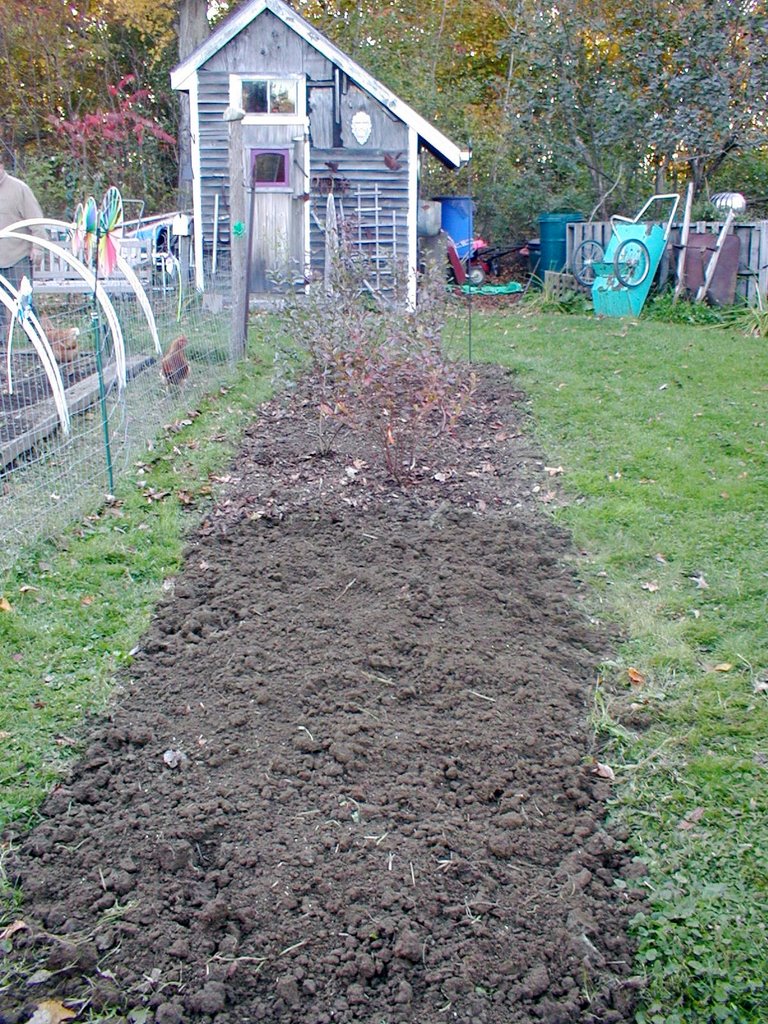 It was another beautiful fall day today, although a cold one after a hard frost last night. We continue to ready the vegetable garden for winter, today pulling the tomato plants and the last of the lettuce and greens. The chickens were very busy, on red alert for worms as we pulled the plants out of the ground. They've done a great job of cleaning up, although I feel bad about the vast number of worms they are eating. (And WHY won't they eat slugs! We've got boatloads of slugs, they'd never go hungry!)
We worked on the blueberry hedge today, turning over the second half and adding 40 lbs. of gypsum, to help lighten the clay soil, and a mix of Espoma Holly-Tone fertilizer for acid loving plants, and Garden sulpher, to acidify the soil a bit --
 currently the pH is 6.5, and blueberries need a pH of 4.5 to 5.0 for best performance. The completed hedge will be 4'x25' and hold 16 highbush blueberry plants. We currently have 7 in place, 2 each of Patriot and Blueray, and 3 unknown varities that came with the house.
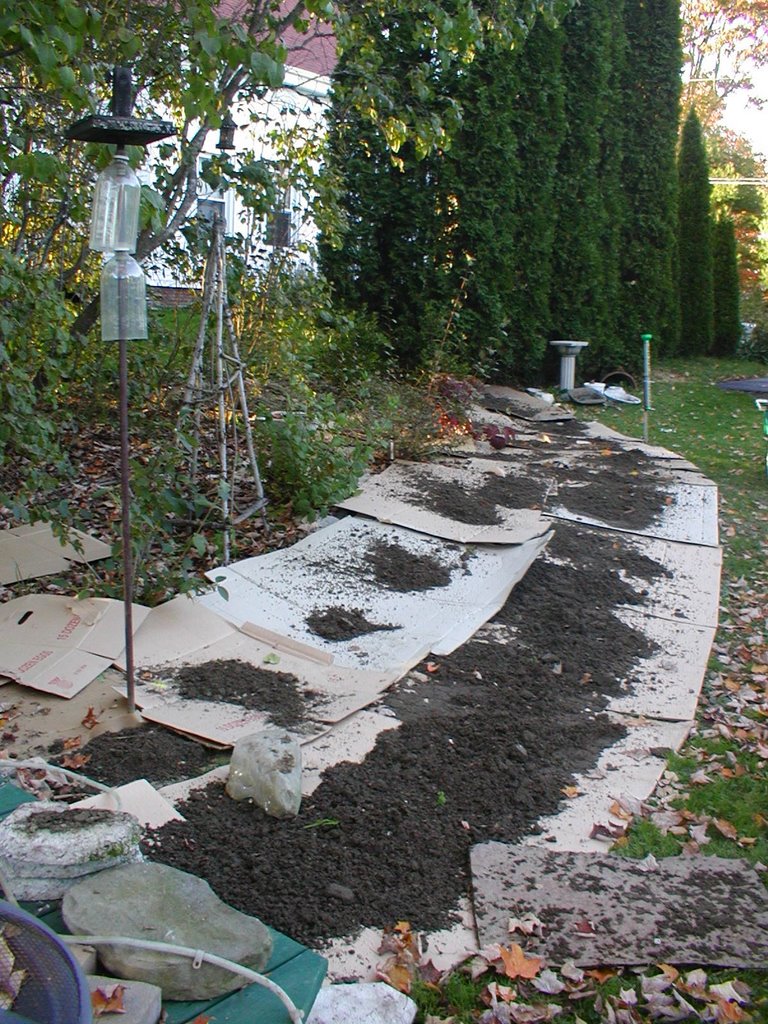
We also worked a bit on a new bed we are planning for the spring as part of our continuing efforts at lawn reduction. This bed will run from the freestanding deck to the driveway, along the western border of the lot. Last week we added three hollies and an oakleaf hydrangea to the back border of
 the bed. Today we mulched with a thick layer of cardboard, and put some sandy soil (left from an earlier project) atop the cardboard to weight it down. I'll add a thick layer of mulch hay and some Fertrell organic fertilizer soon --we hope to pick up some mulch hay Sunday morning.
The other very satisfying project we are working on is preparing for more fruit trees in the backyard. I have a Stella sweet cherry and a Montmorency sour cherry, planted 4 years ago. They flowered wanly this spring, but clearly resented the cold wet spring, and I got no fruit from either tree. Today we plotted the planting sites for an additional 7 trees, a mix of peaches, apples, and plums. I'll add a pear tree next to our existing unknown variety of pear in a different area.
Now the hard part-- how to pick just 2 or three of each fruit?!! We'll get started on the apple question Sunday with a tasting party in the afternoon. We be tasting 7 varieties, Pumpkin Sweet, Winesap, Wolf River, Connell Red, Newtown Pippin, Spencer, Rome, Stayman's Winesap, and Honeycrisp from Pleasant Pond Orchard. Check back later for the complete report.
Tuesday, October 10, 2006
The FEDCO Wishbook
When I was a kid, I remember poring over the Sears wishbook in the weeks before Christmas. These days, my wishbook is the FEDCO Tree catalogue, and it arrived in the mail last Friday.
Who could resist this text?
The problem, of course, is that I cannot. I want one of everything. So over the winter, as I warm my feet by the woodstove, I will thumb through the catalogue again and again, and sort out what I can't live without, and what I can.
Who could resist this text?
Black Oxford Apple Winter. Unknown parentage. Paris, Oxford County, ME, about 1790. This outstanding apple, a favorite long ago around much of Maine, has been making a huge comeback in the last 20 years. Our best seller. Medium-sized round fruit, deep purple with a blackish bloom. From a distance you might think you’d discovered a huge plum tree. A 200-year-old Black Oxford tree still grows in Hallowell, and still bears large crops. Excellent pies, superb late cider. Leave the skins on for a delightful pink sauce. Best eating late December to March. They seem to get sweeter and sweeter as the months go by. Good cooking until early summer. Some insect and disease resistance. Becoming less rare every year! Blooms late. Z4-5. ME Grown.
The problem, of course, is that I cannot. I want one of everything. So over the winter, as I warm my feet by the woodstove, I will thumb through the catalogue again and again, and sort out what I can't live without, and what I can.
Monday, October 09, 2006
Drip, drip, drip
 As we were eating breakfast this morning, Dan asked, "Did you turn the heat on?"
"No, why?" I replied, dreamily looking out the window into the sunny back yard, planning my day over my coffee.
"Do you hear that clicking noise?" he said. As I listened, Dan leaped to his feet and ran into the dining room. "It's dripping!" he shouted, running up the stairs to our bedroom. "The bathroom is leaking!" It was just 8:30 a.m.
Sure enough, in the bath off our bedroom, the hot water pipe under the sink had split, (no, we don't know why) and while we made coffee and toasted bread, it soaked the rag rug on the floor,
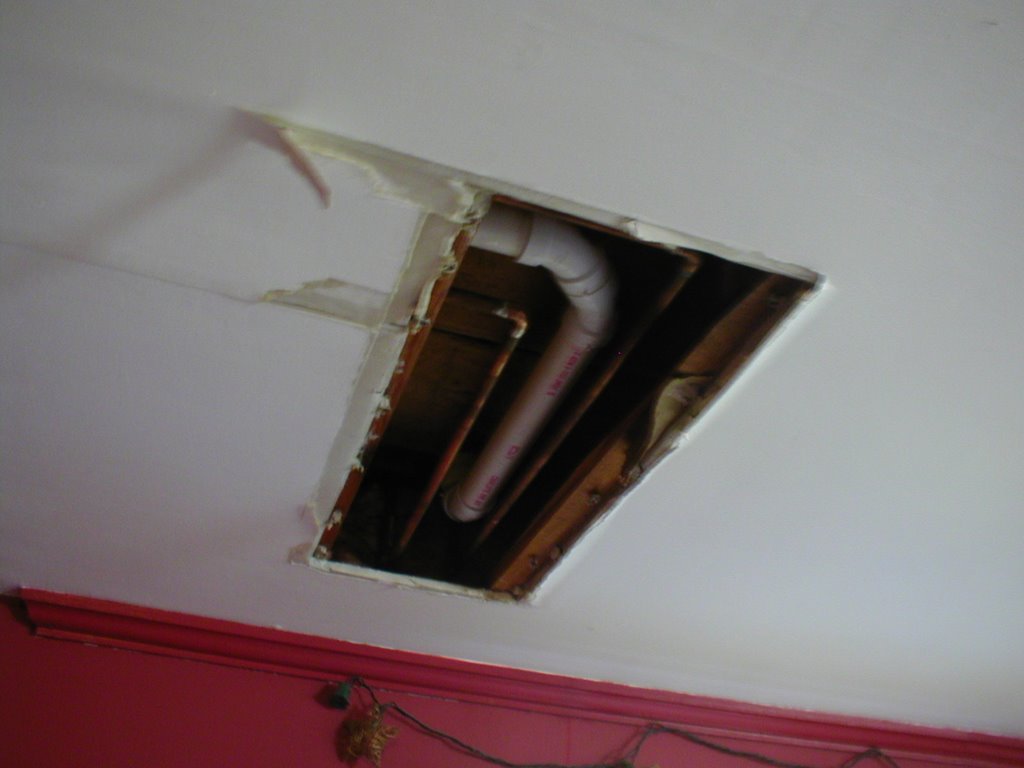
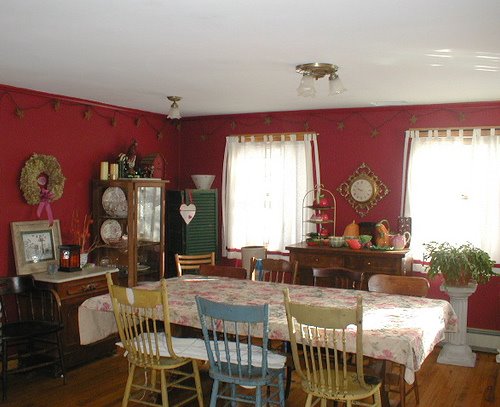 and seeped through the bathroom floorboards and drywall ceiling of the dining room below.
Our lovely dining room now has a large hole in the ceiling where we pulled away the drywall to let the water out, and the water to the bathroom sink is shut off until we repair the leak. It's a good thing I hadn't gotten around to putting the new package of t.p. away under the sink.
Saturday, October 07, 2006
A Holly Hedge
 Today was a gorgeous fall day, with clear skies, no wind to speak of, and mild temperatures after a cold night. We went yard saleing in Brunswick this morning, hoping to come home with one of two bandsaws advertised in the yard sale classifieds, but alas, the saws were sold before we arrived. I did find some baguette pans, and we found a nice 6 lb. sledgehammer which will be very useful.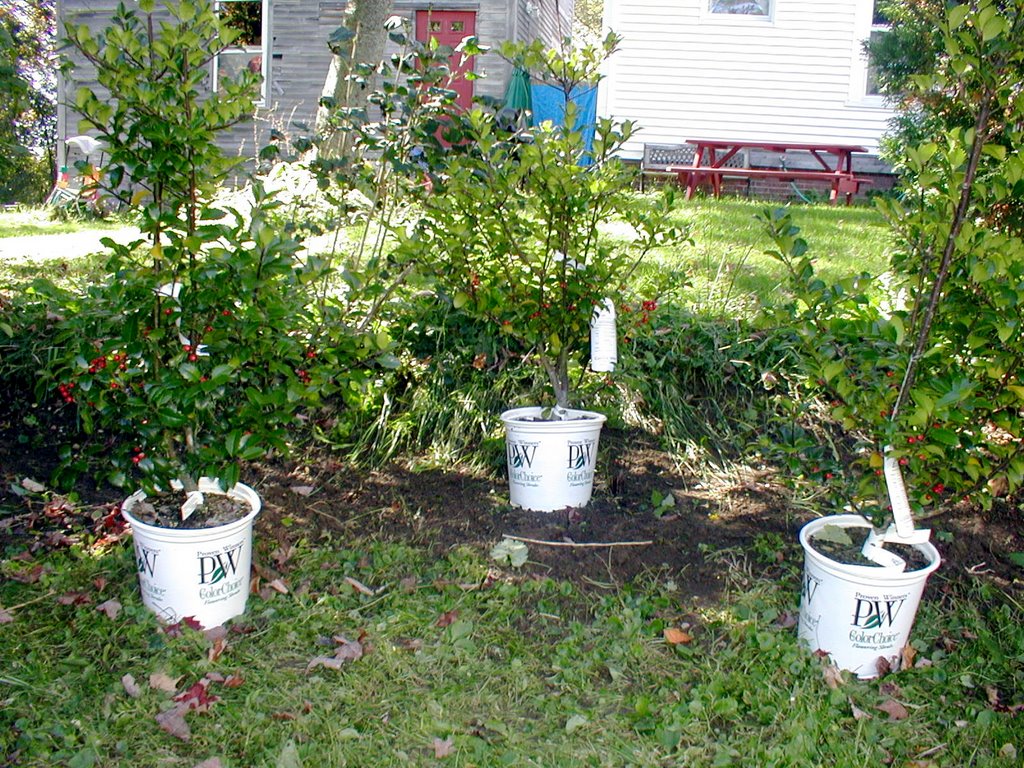
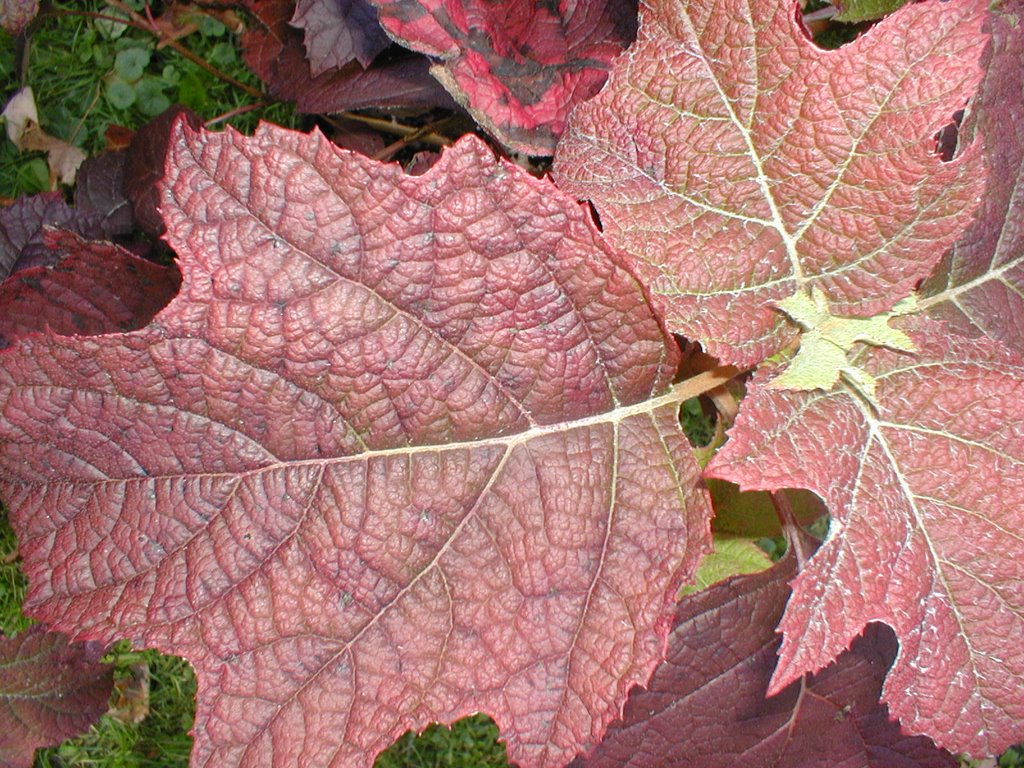
On the way home we stopped at Skillins where we bought 80 lbs. of gypsum to add to the vegetable garden to help lighten our heavy soil, and some Holly Tone organic fertilizer for our acid-loving plants. While we were there, we took a gander at the trees and shrubs, all on sale. I found an oakleaf hydrangea cv. Alice, which I snapped up at 30% off. It has large roughly oak-shaped leaves, and in the fall, turns a gorgeous deep red.
 I was hoping to find some holly bushes for the gap between the arborvitae and the lilac hedges. We saw some Blue Princess and Blue Prince holly bushes, but they just didn't speak to me. Then I saw three Castle Spire female hollies, covered with berries. Where the Blue Princess spread to 6-8 feet wide, 8-10 feet high, and had glossy dark blue- green leaves, the Castle Spire holly is narrower, only 3-4 ft wide, and up to 10 feet high, with shiny dark green leaves.
At that size, thy seemed just the ticket for filling the gap, and they two were 30% off. We bought all three, knowing that we will need to add
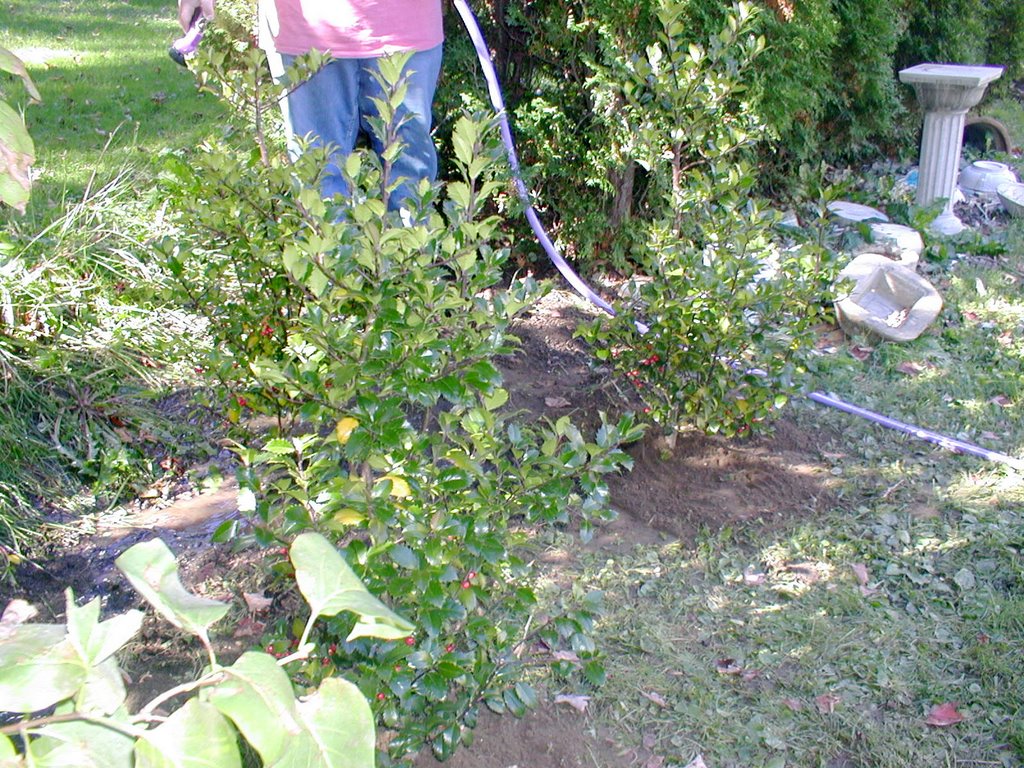
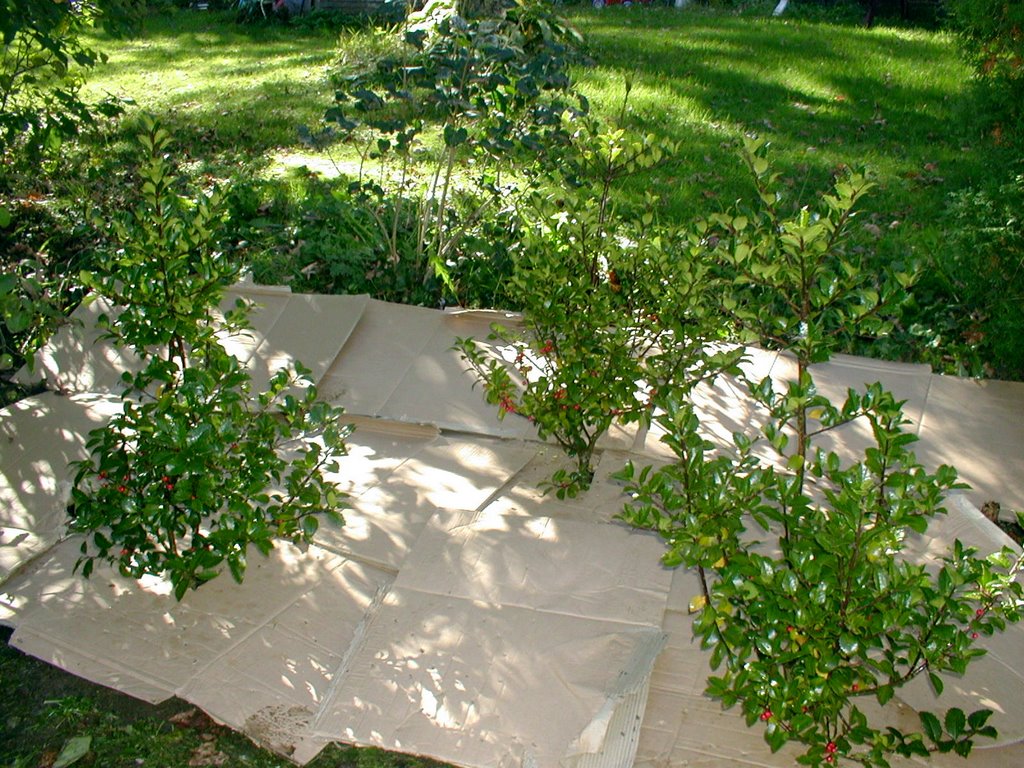 another male holly. As we set them in place, we decided we need two more, a male and a fourth female, to fill out the hedge and form a nice backdrop for the garden bed we have planned in front of them. We planted the hollies and the hydrangea after lunch, amending the soil with compost and some Holly Tone fertilizer, watering them well, and mulching with a thick layer of cardboard. We will wrap each plant in floating row cover fabric to protect them from the wind,
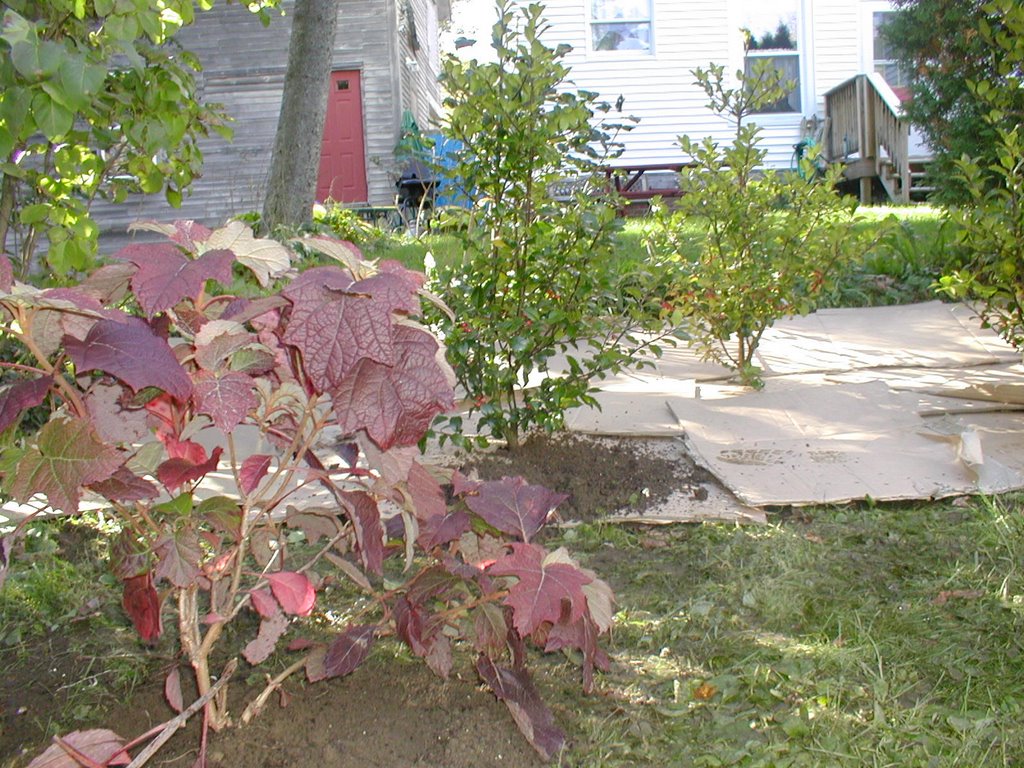 cover the cardboard with hay and compost, and by spring, the grass will be dead, the worms abundant, and I hope, our new plants will be very happy. And I'm happy too, after all, when your best friend is named Holly, you certainly should have her in your yard!
Hard Frost
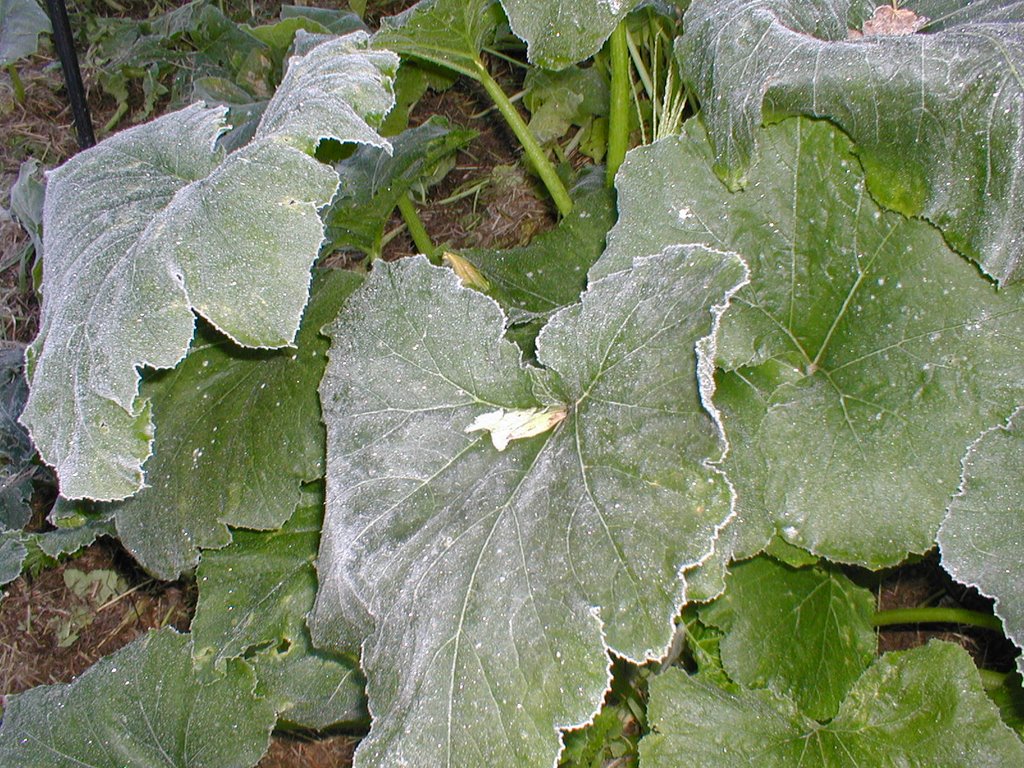 We had our first hard frost last night. When I came downstairs this morning, and checked the thermometer on the barn, it read 35˚F, brrr. The leaves were coated with rime, and on the squash, already beginning to droop. I hope we can still harvest the 2-3 remaining baby squashes for dinner tonight.
We brought in some of our planters last night, the rosemary topiaries, the hens and chicks, the parsley, and covered the scented geraniums with old tablecloths. Over the weekend, we'll have to cut them back and prepare them to come inside for the winter.
The temperature in the kitchen this morning was a nippy 57˚F, so I turned the furnace on for the first time this fall. We don't have the storm windows on yet, so we'll need to take care of
 that little chore as well this weekend.
We still have leeks and cauliflower in the garden, and sproutless Brussels sprout plants which I suspect won't be providing sprouts this year. The leeks and cauliflower will last a bit longer -- we'll eat the cauliflower, and store the leeks for use through the early fall.
The rest of the garden we let go -- there were a few small yellow pear tomatoes remaining on the vine, which we left to the chickens. Iris cleverly developed a method for harvesting the tomatoes beyond her reach. Climbing onto a stack of three bricks left next to the raised bed, she leaped straight up into the air and pecked at the tomatoes until they fell from the vine. She unwillingly shared a few with her sisters, but she certainly enjoyed plenty herself.
The girls were rather subdued for a few days after Daisy's death, but seem to be returning to their former high spirits, bolting out of the coop in the morning when I open the door, raucously demanding their customary handful of scratch. They are doing a great job of cleaning up in the garden. Once we pull the remaining dead plants, I am sure they will clean up the remaining bugs, larvae, and I hope, some of the weed seeds quite nicely as well as stirring up the top layer of soil and adding some fertilizer.
I am looking forward to putting the vegetable garden to bed, and starting work on the new garden design. We plan to create raised beds in a U shape, following the perimeter of the garden fence. We'll dig out a path around the beds, adding that soil to the beds to raise them a bit. The center section of the U will be reserved for herbs, and the outside section will hold the remaining vegetables, with the climbing veggies strategically placed next to the fence. We are going to adopt more of a "square foot" bed plan, with intensely planted beds and narrow pathways between them for access. I need to draw up the plan on graph paper to get a to-scale sense of how it will work, but my back of an envelope calculations indicate it will work just fine.
Tuesday, October 03, 2006
A Great Sadness
Yesterday, our chicken Daisy died.
We noticed on Sunday afternoon she was not feeling well; she was standing in the vegetable garden, feathers all fluffed, and sleeping. We brought her in the shed, and put her in a plastic bin with shavings, and did some research. We think she had an impacted crop, possibly from eating some apple peels I gave the chickens on Friday evening. According to one chicken website, long strands of grass or apple peels can become impacted in the crop. Some chickens are able to recover on their own. We got yogurt, one remedy we read about, but to no avail.
I feel very bad about it, especially as I was the one who gave the girls the apple peels. Poor Daisy, I can only hope she didn't have too much pain or suffer much.
We noticed on Sunday afternoon she was not feeling well; she was standing in the vegetable garden, feathers all fluffed, and sleeping. We brought her in the shed, and put her in a plastic bin with shavings, and did some research. We think she had an impacted crop, possibly from eating some apple peels I gave the chickens on Friday evening. According to one chicken website, long strands of grass or apple peels can become impacted in the crop. Some chickens are able to recover on their own. We got yogurt, one remedy we read about, but to no avail.
I feel very bad about it, especially as I was the one who gave the girls the apple peels. Poor Daisy, I can only hope she didn't have too much pain or suffer much.
Sunday, October 01, 2006
Fall's Final Days in the Vegetable Garden
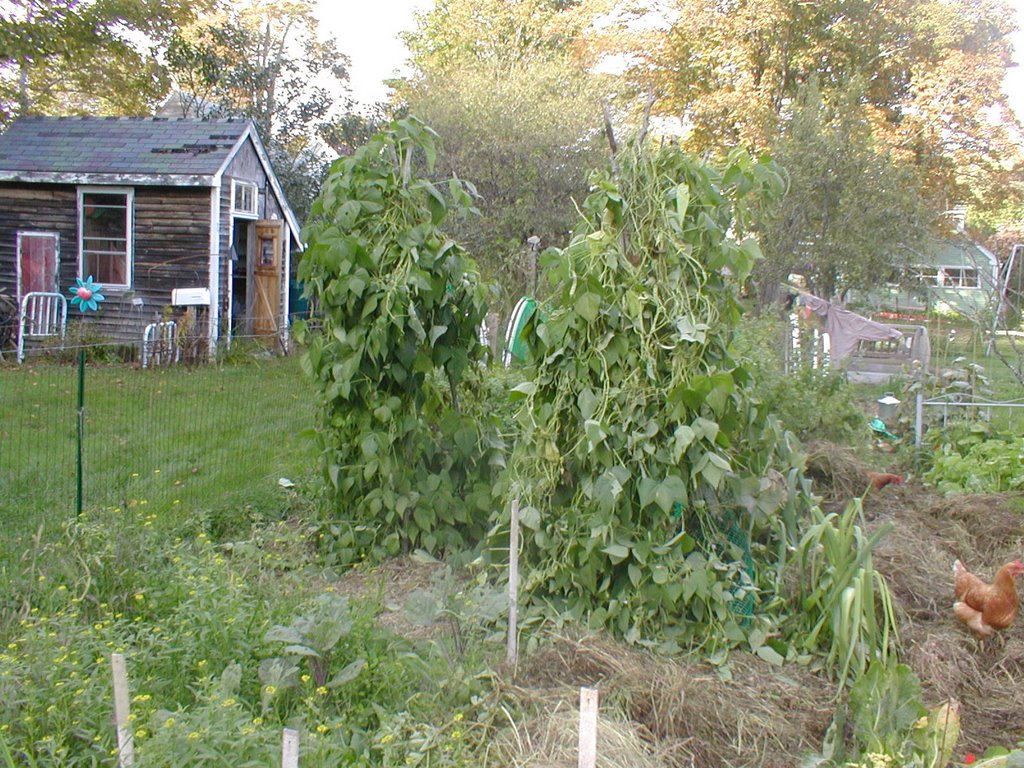 Saturday, we began the process of putting the vegetable garden to bed. We have yet to have a frost, but we've had two pretty cold nights, cold enough to nip some of the leaves of the tomato, bean and squash plants. We picked a heap of beans a few weeks ago, freezing some and putting up two batches of dilly beans, one of my favorites. After Friday night's brush with frost, it was time to pick the remaining beans, dig the potatoes, and harvest any other remaining vegetables.
We also decided that with the end of the garden, it was time to let the chickens have the run of the vegetable garden, and to re-seed their run with grass and let it rest.
First, we harvested all the Swiss Chard -- that could have stayed for a whil
 e longer, but was in the way of the alternate door of Henbogle coop. It was gorgeous, one of the garden successes this year. We grew the Rainbow Lights variety, and it really is beautiful, with a nice, mild flavor.
With the chard gone, we let the chickens in the garden. They were ecstatic, exploring under the bean tepees, patrolling the remaining cauliflower for any errant bugs, and when I dug the potatoes -- well, they were right there eating
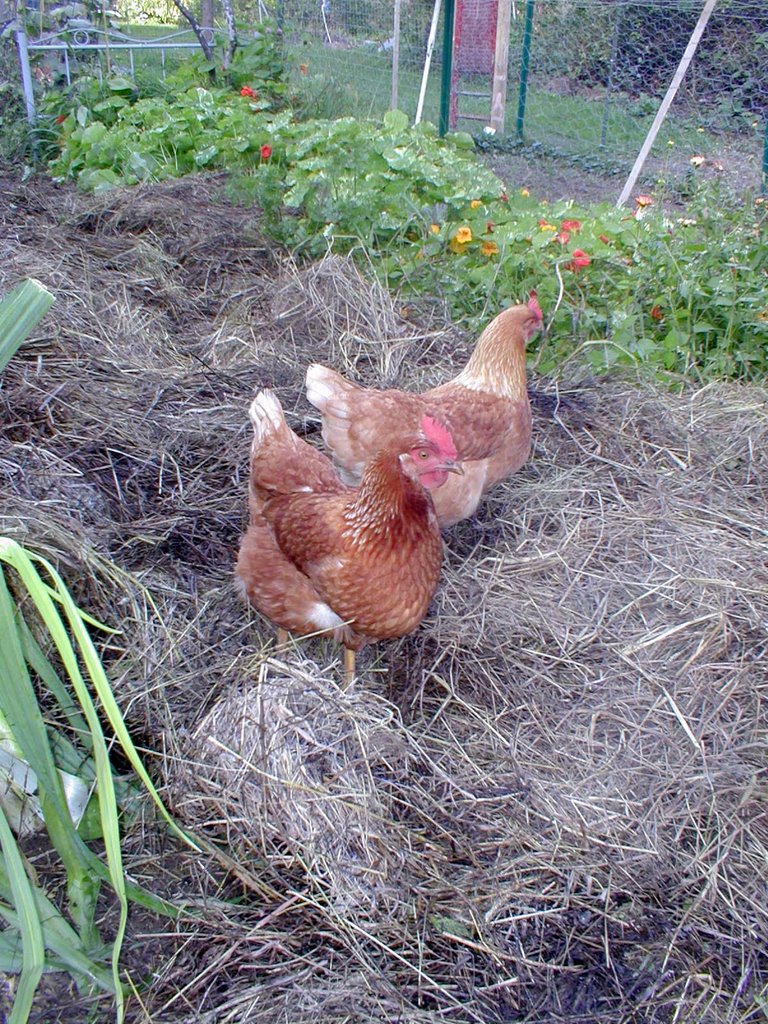 any bug that came to light. I had all I could do to avoid digging up a chicken.
Entertaining the girls was the best part of the potato harvest this year. I planted 4 types of potatoes, Finn, Carola, Rose Gold, and LaRatte. The Finns and Carolas were a total washout, the very rainy June just turned them into mush. I planted the Rose Gold and LaRatte later, and we did harvest
 some, but not many, sigh. We harvested enough for 4-5 meals. It was just too wet for them to thrive, although the tops looked good. Our new garden plan will include lots of clay-breaking soil amendments this fall, and raised beds in an attempt to keep the feet dry of our vegetables.
We had a good crop of green peppers, unfortunately all ready now, rather than 1-2 a week beginning a month ago. Still, we'll eat them and enjoy. And the beans, oh, the beans,
 We picked a huge basketfull, and if the plants don't get hit again with a frost, we may get more still. We had a huge feast Saturday night, with scallops from the freezer (to make room), beans and freshly dug potatoes. MMMMMMM!
Saturday, September 30, 2006
Apples of Maine
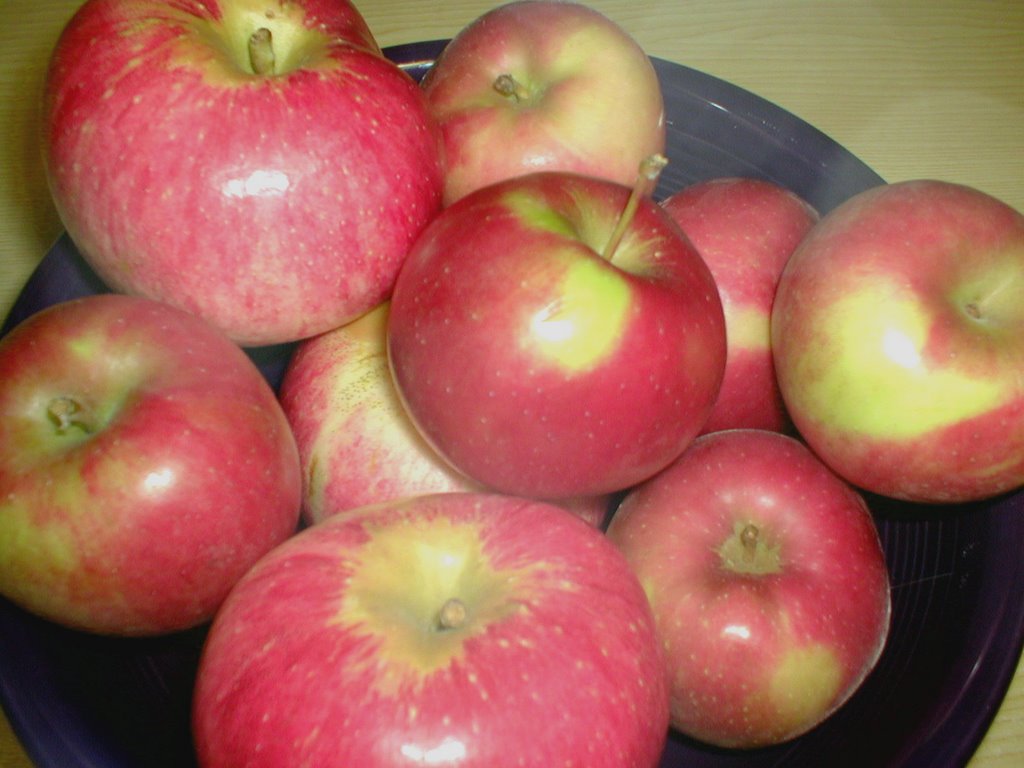 The height of apple season is arriving in Maine. Apples are one of the sweet treasures that distract us from the end of the glorious summer, and Friday I surrendered myself to distraction.
The weather Friday was cold and blustery, the perfect day for a delicious apple concoction to be baking in the oven, scenting the kitchen with apples, cinnamon and sugar. On the way home from work, I stopped at the Pleasant Pond Orchard to buy some good baking apples. Food snob that I am, a bag of utility Macs from the supermarket just won't do -- I like to cook with a mix of apples, heavy on the heirloom varieties, with their complex, sweet, winey tartness. Pleasant Pond Orchard grows over 30 varieties and I enjoy several trips there every fall, talking about apple varieties and tasting many with one of the owners, Mary Alioto.
We had a good chat, and I tasted some yummy varieties. It is still early apple-wise, but I came home with a mix of Wolf River, Winesap and Spencer apples. Some of my other favorites, Gravenstein, Northern Spy, and Pippins, are still to come. I decided to make my mom's apple crisp, mixing the three varieties and throwing in some Macs I had at home.
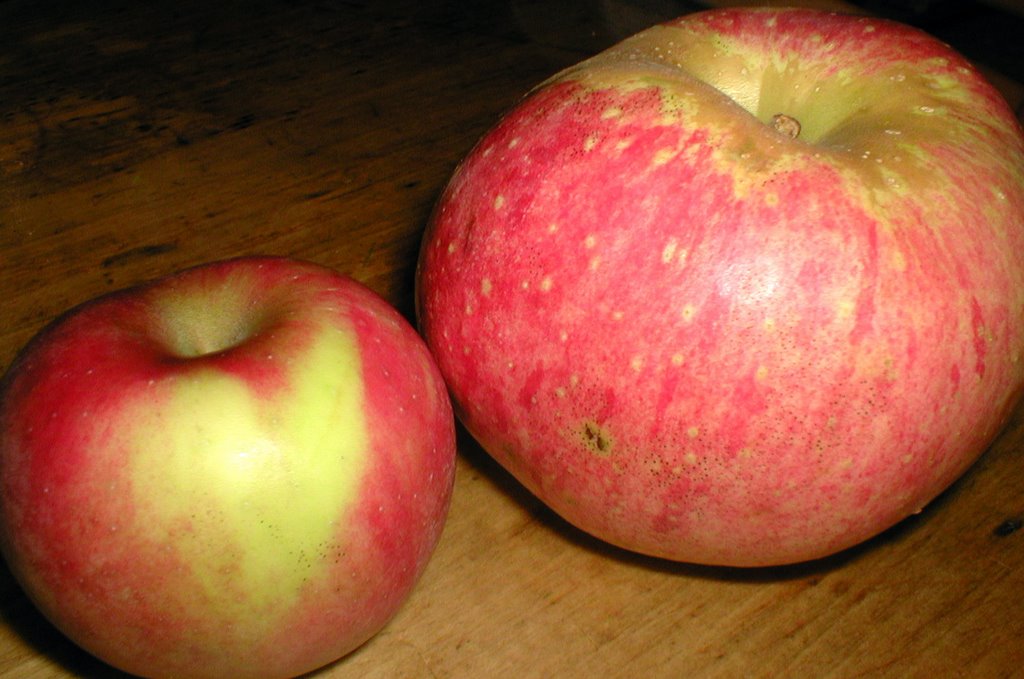
Over the summer at a tag sale, I found something I've been eyeing for quite a while, an old-fashioned Yankee Apple Peeling Gizmo. Purported to peel, core and slice the apple while I simply cranked, it seemed too good to be true. With all those apples, (I like LOTS of apples in my crisp) I decided to take it for a test drive. The first disappointment was that the clamp mechanism did not open far enough to clamp onto my counter, hmmm. (Newer ones use a suction base.) I solved that by clamping the Gizmo onto the edge of my breadboard, allowing just the edge to hang off the counter. The second disappointment was that the huge Wolf River apples (sometimes called pie apples
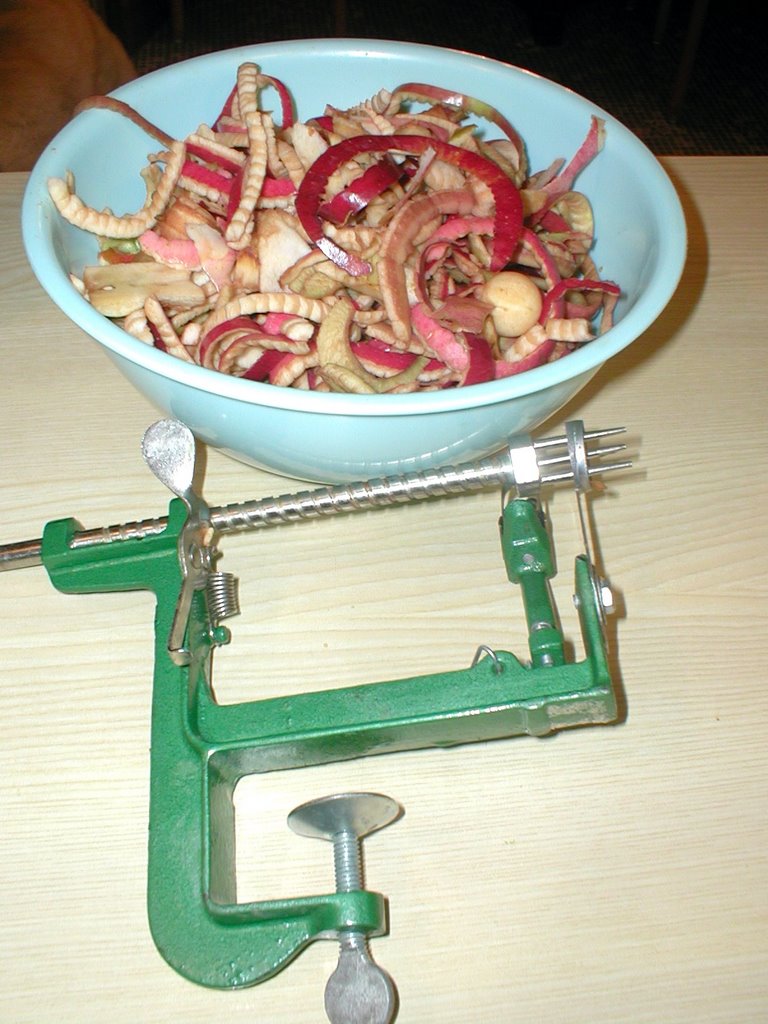 because just one is enough for a pie), were too large to fit in the mechanism. I perservered, though, and with the smaller apples, the peeler worked a treat! In no time I had a large bowl of apples all peeled and ready for the topping. I LOVE the Gizmo, and best of all, it was $1. Tag sales rule.
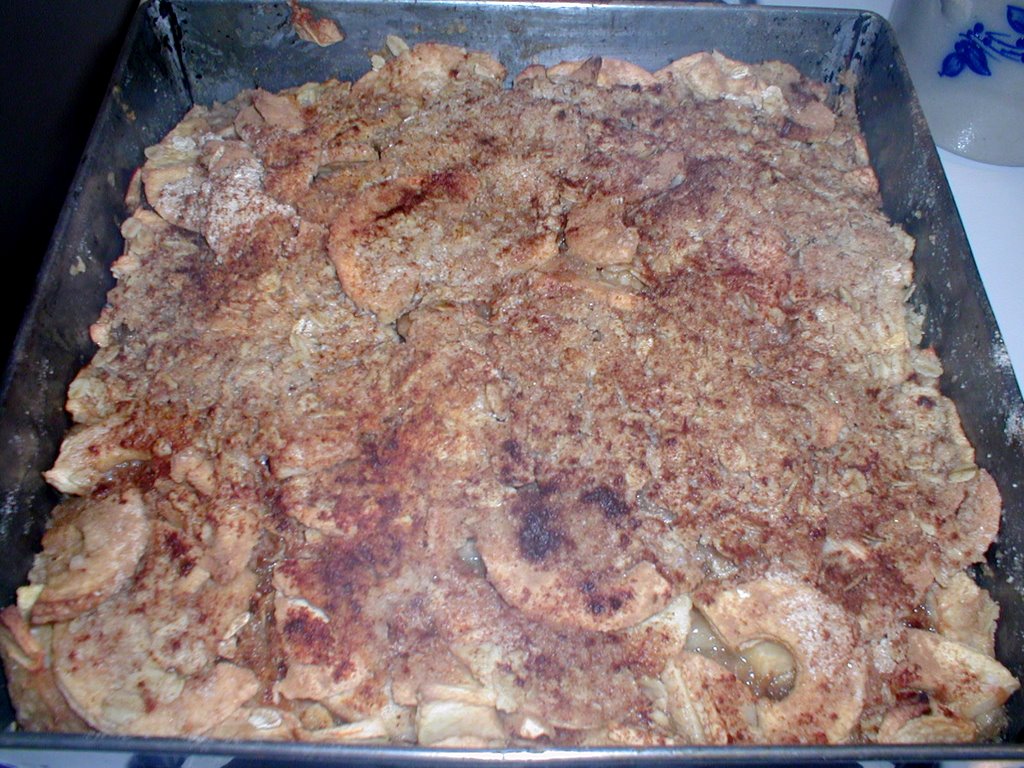
I cranked up the oven, and cut together the butter sugar, flour, cinnamon, and freshly grated nutmeg. At the last minute, I added a handful of old-fashioned rolled oats to soak up some cholesterol. I mixed half the topping with the apples, layered them in the pan, and added the rest of the topping to, well, the top. I popped it in the oven, and in no time, my house smelled like a warm, cozy fall day....
The mix of apples was delicious, a complex blend of sweet, tart goodness. I love reading of the
 history of these heirloom apples, a fascinating read on the topic is Apples of Maine by George Stilphen. The FEDCO tree catalogue is another mouthwatering source of information on apple varieties, including not only cooking apples, but expanding into historic cider apples. It's a darn good thing my lot is only 3/4 of an acres, because after reading the FEDCO catalogue, I'm ready to plant an orchard. I'll take one of each heirloom please -- you can keep the modern apples.
Wednesday, September 27, 2006
Roadside Treasures
 Last Friday, Dan came home with home a big present for me, my very own cement mixer. It is beautiful. An electric model, it was carefully maintained by its previous owner, and is in excellent condition.
Dan saw the mixer set out at then end of a driveway on his commute home from work. It hadn't been there in the morning. He pulled over, and talked to the owner, who said "I just set that out, no more'n an hour ago." Fortunately, it isn't that heavy, so the two of them were able to load it in Dan's truck.
This isn't the first treasure my sharp eyed husband has spied at the edge of the road. Last summer we saw a nice double-bowl cast iron sink sitting at the edge of someone's lawn with a free sign attached to it. We screeched to a stop, and the next weekend constructed a stand for the sink out in the garden to wash vegetables before they come in the house. Next summer, we'll
 run a dedicated water line right out to the sink.
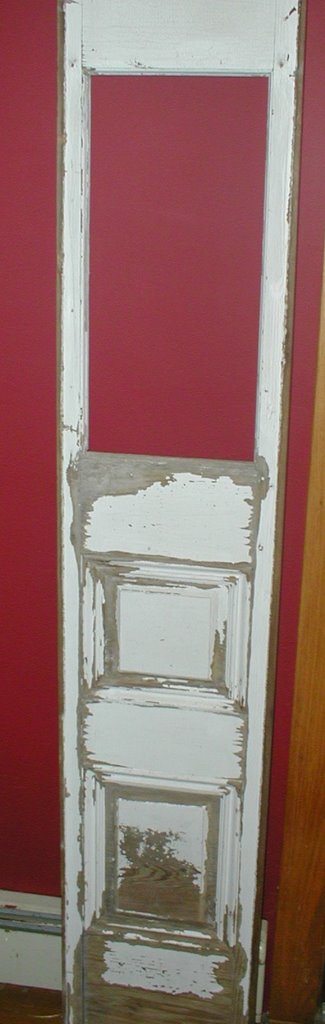
One day last fall, Dan came home from school very excited with his latest find --the antique side windows from the front door of an old house under renovation. The windows are gorgeous, about a foot wide and 7 feet high. We've been talking about building a rustic china cupboard for the dining room fo some time -- these windows are perfect for that purpose --and did I mention these were also free?
Of course all these treatures add to the already endless list of projects we have in mind for someday (the china cupboard, a new front step, a new foundation for the garden shed, paved paths in the gardens, etc., etc.); fortunately, we have a big barn.
I do hope we can build the china cupboard and the new range hood cabinet over the winter. It would be good to get that done so that we can concentrate on our concrete projects next summer. I can hardly WAIT to get to work.
Tuesday, September 26, 2006
All Things Maine
Chris over at All Things Maine posted this link to a story in the Lewiston Sun-Journal. It seems the LSJ is asking the gubernatorial candidates to put their gills in the water with regard to the water quality of Maine's Androscoggin River. To see the goldfish at the LSJ site, click here.
I'll have to check in with the LSJ more often --it seems like maybe they are trying to spice up Maine's ever-so-bland news industry.
I'll have to check in with the LSJ more often --it seems like maybe they are trying to spice up Maine's ever-so-bland news industry.
Falling from (blogging) grace
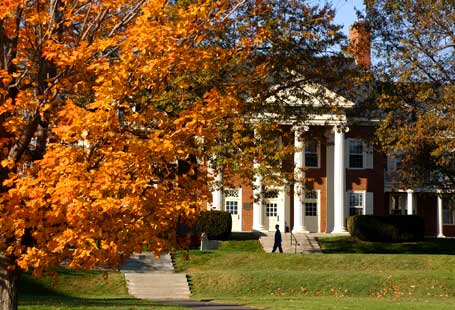 My devoted readers will have noticed the long absences between posts of late. I only wish the cause were the overwhelming zucchini harvest, or a lottery-winnings financed vacation to Italy. Alas, it is that both Dan and I returned to the world of education, he in his new role as a middle-school technology teacher, I to my role supporting civic engagement efforts at a small college.
 The adjustment is brutal. It isn't that we don't work like dogs during the summer --if you've been reading closely you can surely discern that; rather that during the summer, our routines subtly adjust to the conditions --up with the sun, slow down at noontime, work in the barn on hot days, etc.
With the start of school, that natural rhythm is completely disrupted. The academic year begins the same way a circus performer is shot from a cannon --BOOM! The pace is occasionally frenzied, frantic much of the time, busy all the time. You drag yourself home at the end of the day, look at the dog, then look away from the eager face and pretend not to feel guilty that he's not going for a walk again. Picking the tomatoes and beans is all you can muster in one evening, cooking them waits for the following night.
Gradually, you adjust to the pace as the semester settles into its more typical rhythm. You can cook a more complicated dinner. A Friday arrives and you feel like you can stay up past 9 pm and watch a DVD. And suddenly, you have something to say again on your blog, and the energy to type it in.
Monday, September 25, 2006
Food Policy, or Food-born Pandemic Policy??
This spinach scare is, I hope, opening a lot of previously closed eyes to the travesty that is big agriculture in this country. Those amber waves of grain we sang of in elementary school have become factory farms, polluting our fruited plains and causing millions of animals to live in cages or fetid cesspools known as feedlots before meeting their often painful and terrifying demise at the slaughterhouse.
"We now truly do have "factories in the fields." And factories, whether manufacturing steel or frozen peas, generate waste -- in agriculture some 1.4 billion tons per year, 10,000 pounds for each American," write Al Meyerhoff and William B. Schultz in an article in Sunday's Washington Post. 10,000 pounds a year!!! That is insane.
Meyerhoff and Schultz should know. Meyerhoff is a past director of the Natural Resources Defense Council public health program, and Schultz was an FDA deputy commissioner.
Are we lemmings fleeing frantically for the cliff of a giant food-born illness epidemic? We need to wake up and vote with our grocery budget. It is way past time to send a message that we have had it with the relentless cost cutting of multinational retailers, and the blind eye and ostrich attitude of our government to these inhumane, unhealthy food safety (and I use that term loosely) practices.
Support your local farmer, who is working hard just like you are, to feed his family and protect her land, water, air, and children from the environmental ravages of factory farming. Go to your local farmers market, and get some delicious, local, fresh, healthy food. It will taste great, and in the long run, cost a lot less, and make you feel a lot better.
"We now truly do have "factories in the fields." And factories, whether manufacturing steel or frozen peas, generate waste -- in agriculture some 1.4 billion tons per year, 10,000 pounds for each American," write Al Meyerhoff and William B. Schultz in an article in Sunday's Washington Post. 10,000 pounds a year!!! That is insane.
Meyerhoff and Schultz should know. Meyerhoff is a past director of the Natural Resources Defense Council public health program, and Schultz was an FDA deputy commissioner.
Are we lemmings fleeing frantically for the cliff of a giant food-born illness epidemic? We need to wake up and vote with our grocery budget. It is way past time to send a message that we have had it with the relentless cost cutting of multinational retailers, and the blind eye and ostrich attitude of our government to these inhumane, unhealthy food safety (and I use that term loosely) practices.
Support your local farmer, who is working hard just like you are, to feed his family and protect her land, water, air, and children from the environmental ravages of factory farming. Go to your local farmers market, and get some delicious, local, fresh, healthy food. It will taste great, and in the long run, cost a lot less, and make you feel a lot better.
Sunday, September 24, 2006
March magic
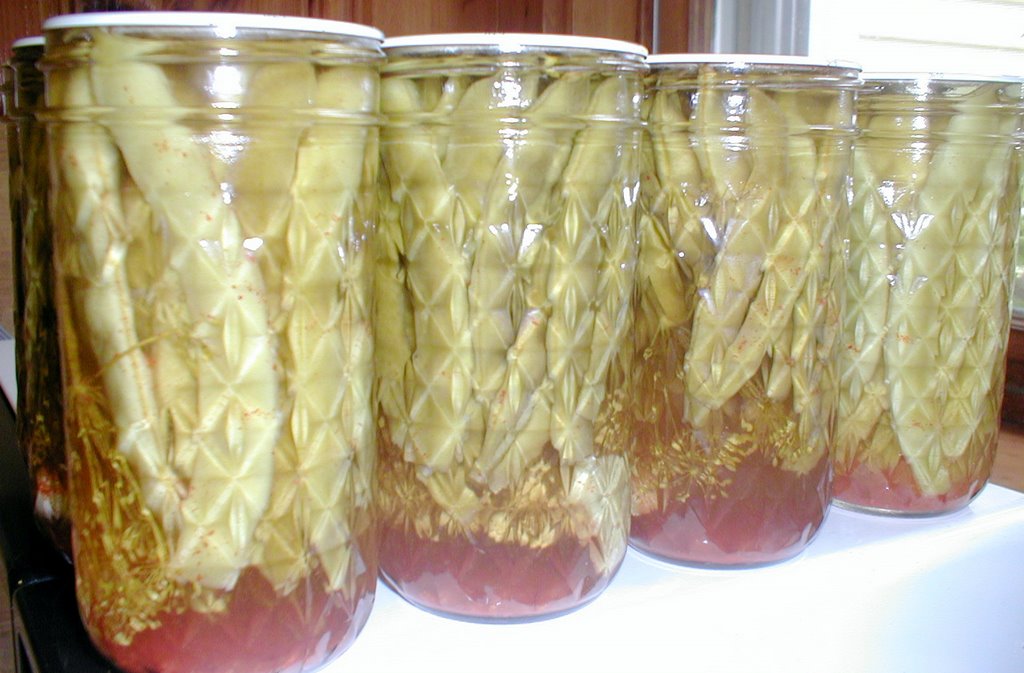 We made dilly beans this weekend. Vinegar, salt, dill, garlic, cayenne pepper and green beans steeped over the winter, and served on a bleak day in March are a vivid reminder that winter will end, and spring will come, and green beans will grow in the sunshine of the garden.
We made them with the pole beans grown from the seed given to me by my colleague Michael. I've never used pole beans for Dillys before, but I can't see why they won't be equally fabulous.
Our dill suffered a chicken related tragedy early in the season, and the replanted dill isn't ready, so I purchased dill at Goranson Farm. The fragrance was amazing, filling the car, then the kitchen. How long before March?
Thursday, September 21, 2006
Food Snobbbery? or Self-preservation?
Thursday in the Food Section of the New York Times was an article about the challenges of shopping in the city supermarket. While on the one hand, I found the article a lament for food snobs everywhere, there certainly were strong elements of truth in the article, and its companion for food snobs, The Best Pantry Basics list.
"Somewhere in the vast selection of jarred tomato sauces, Cheddar cheeses, baked beans and dairy-case puddings, I knew there must be food that is reasonably wholesome and possibly delicious," the author, Julia Moskin, wrote. "I limited myself to short ingredient lists and minimal use of artificial preservatives, sweeteners and partially hydrogenated oils."
She has a point. I am, after all, something of a food snob myself, not content with the wares of the local supermarkets or even the local farmers' market. No, I must grow it myself, cook it from scratch, grind my own flour -- oh wait, that's Martha. This obsession has paid off in terms of my spinach consumption, I might add.
Seriously, though, have you read the ingredients on the label of a jar of Ragu lately? Or frozen or fresh pasta, salsa, soup, stew.... you name it. High fructose corn syrup, hydrogenated fats, sodium, BHT, you name it, yeesh. And often the second or third on the list (meaning lots of it) is the high fructose corn syrup.
I was surprised to find a number of items on Julia's list that appear regularly in my cart, too. Stoned Wheat Thins (crackers), B&M Baked Beans, Cabot Sharp Cheddar (I prefer the Hunter's Seriously Sharp, myself) and a selection of ethnic ingredients such as coconut milk or chipotle chiles. What really surprised me, though, was the brevity of Julia's lists, and the realization that I agree with her. Most prepared food has become so bad that I just won't buy it anymore. Gone are the days when a jar of pasta sauce could provide a quick nutritious meal after work. On those days, it's Teddy all-natural peanut butter on homemade bread.
I will say, though, that I do still enjoy my B&M Baked Beans, made in Portland just 35 or so miles from my home. I love driving into Portland and smelling the beans baking. I do think they are sweeter now (and wish they were not) then they were in my youth when I ate them regularly, as good old Maine tradition calls for, on Saturday nights with brown bread, coleslaw, and red hotdogs.
"Somewhere in the vast selection of jarred tomato sauces, Cheddar cheeses, baked beans and dairy-case puddings, I knew there must be food that is reasonably wholesome and possibly delicious," the author, Julia Moskin, wrote. "I limited myself to short ingredient lists and minimal use of artificial preservatives, sweeteners and partially hydrogenated oils."
She has a point. I am, after all, something of a food snob myself, not content with the wares of the local supermarkets or even the local farmers' market. No, I must grow it myself, cook it from scratch, grind my own flour -- oh wait, that's Martha. This obsession has paid off in terms of my spinach consumption, I might add.
Seriously, though, have you read the ingredients on the label of a jar of Ragu lately? Or frozen or fresh pasta, salsa, soup, stew.... you name it. High fructose corn syrup, hydrogenated fats, sodium, BHT, you name it, yeesh. And often the second or third on the list (meaning lots of it) is the high fructose corn syrup.
I was surprised to find a number of items on Julia's list that appear regularly in my cart, too. Stoned Wheat Thins (crackers), B&M Baked Beans, Cabot Sharp Cheddar (I prefer the Hunter's Seriously Sharp, myself) and a selection of ethnic ingredients such as coconut milk or chipotle chiles. What really surprised me, though, was the brevity of Julia's lists, and the realization that I agree with her. Most prepared food has become so bad that I just won't buy it anymore. Gone are the days when a jar of pasta sauce could provide a quick nutritious meal after work. On those days, it's Teddy all-natural peanut butter on homemade bread.
I will say, though, that I do still enjoy my B&M Baked Beans, made in Portland just 35 or so miles from my home. I love driving into Portland and smelling the beans baking. I do think they are sweeter now (and wish they were not) then they were in my youth when I ate them regularly, as good old Maine tradition calls for, on Saturday nights with brown bread, coleslaw, and red hotdogs.
Friday, September 15, 2006
Compost Saves the Day!
 In August, I lamented my failure to grow even one zucchini successfully this year. Success, however, has not eluded me, at least not success with zucchini. Earlier today I spied a zucchini squash hiding amidst the leaves of the volunteer squash plant growing in the compost pile. Hooray for the compost pile!!
I found it just in time to harvest it before it became a monster zucchini. I think grilled with olive oil and fresh basil, freshly ground black pepper, maybe a sprinkle of feta cheese....
And on another note, isn't the gate seen in the photo cute? Dan made it from some old window shutters found at a tag sale.... Go Dan!
Thursday, September 14, 2006
Marvelous Merrymeeting
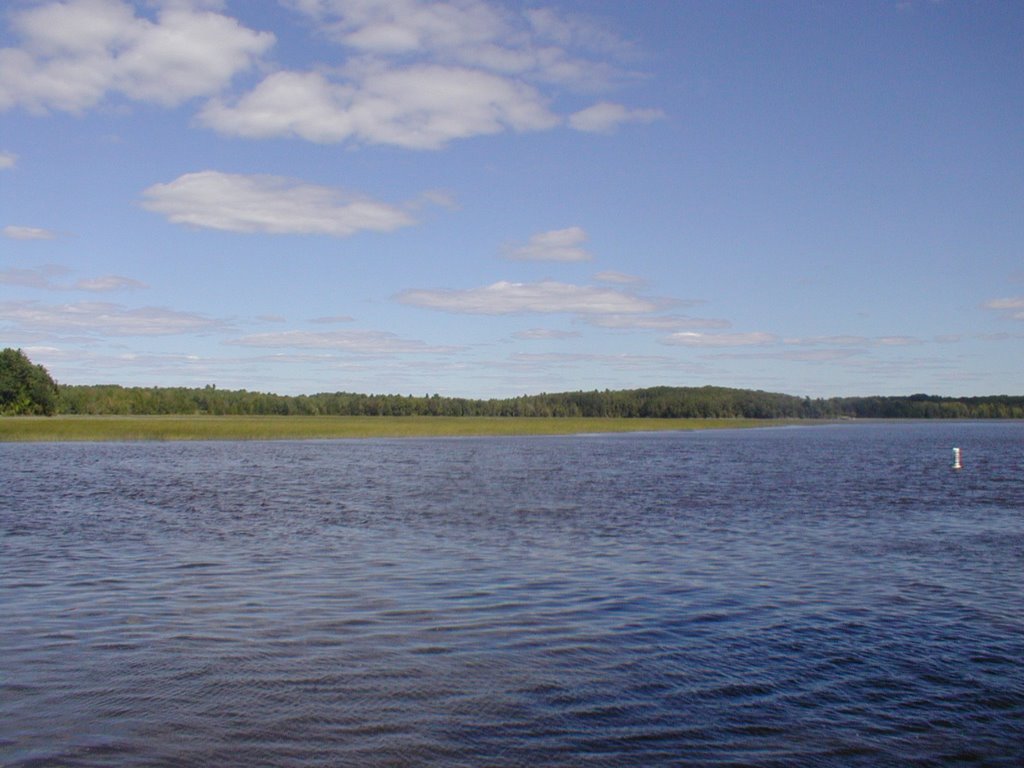
 Sunday afternoon, we loaded up the kayaks and drove south about 8 miles to Bowdoinham for a paddle on the Cathance River downstream to Merrymeeting Bay. Merrymeeting Bay is an incredible inland estuary formed where 6 rivers meet and merge into one, the mighty Kennebec River, which continues its travel to the ocean at Fort Popham and Popham Beach. Merrymeeting Bay covers about 9,000 acres and has a tide of 5 feet, even though it is 17 miles from the ocean. It is an important habitat for wildlife and a glorious spot for birdwatching.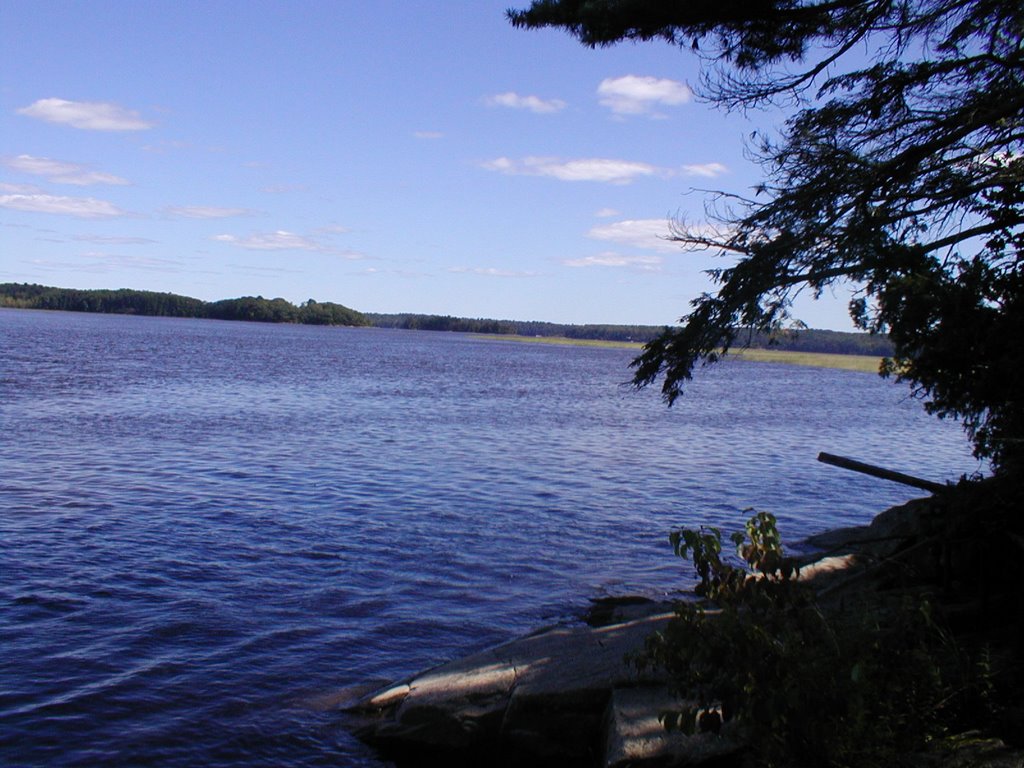
We put in at the Bowdoinham Town Landing at about 12 pm, and paddled downriver on the Cathance toward the Bay. The tide was coming in, and mitigated any advantage of paddling with the current. We weren't rushing, stopping to poke about in a few places, and we were paddling against the wind for much of the way; we got to the edge of the Bay at Center Point at about 1:40 pm. We aimed for some granite ledge, planning on getting out to stretch our legs.
As we approached, a mature bald eagle took
 flight from a pine in front of me, dropping lazily toward the water before stretching his wings and flying off. The bird was less than 15 feet away, and the sun was at its back shining through the wing and tail feathers; it was an amazing sight.
We stretched our legs and drank some water, looking about at this gorgeous place. In the fall it must be an incredible sight, filled with migrating waterfowl stopping to feed on the wild rice along the shore of the bay (see the rice on the left in the bottom photo). Climbing back into our boats we again agreed that we are really lucky.
Paddling back against the current but with the tide was a snap, the tide pushed us along, requiring mainly paddle strokes to correct direction, and the Bowdoinham Town Landing was in sight in just an hour of easy paddling, we arrived at about 3 pm. We got home in plenty of time to unload the boats and commune with the chickens a bit before dinner. Life is good.
Monday, September 11, 2006
When chickens give you eggs, make quiche
 Sunday dawned clear and sunny, but feeling guilty, we decided we should paint, and I needed to do some laundry. The kayaks sat forlornly against the barn.
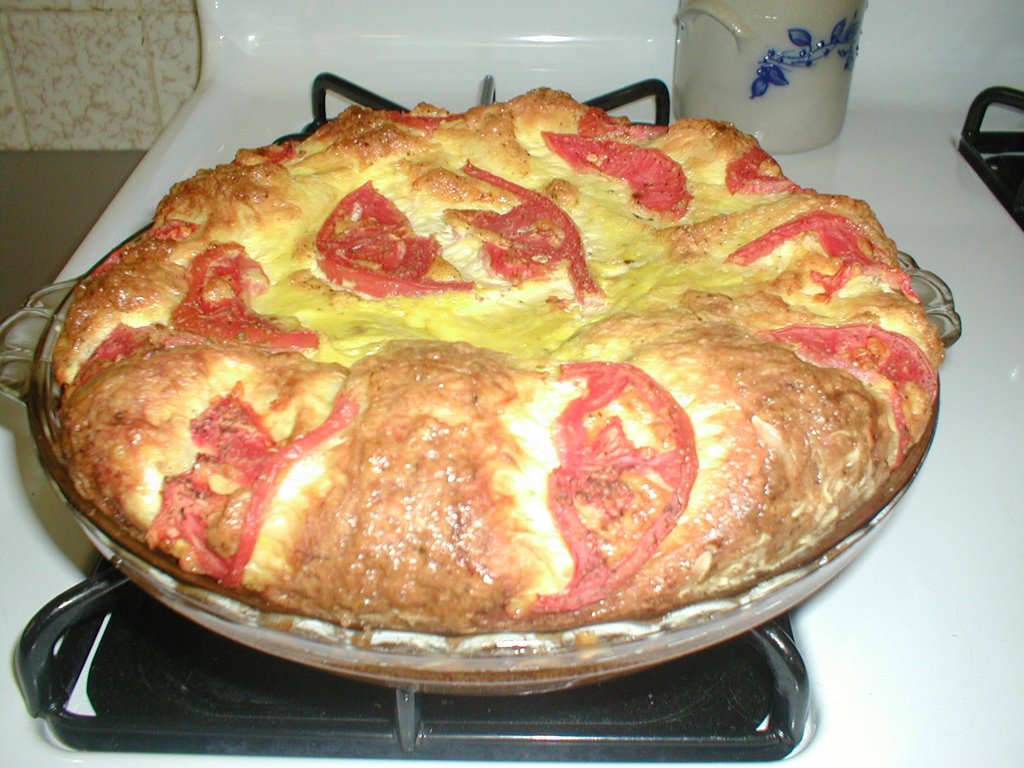
We got another 3 eggs from the chickens Sunday. (We now think all of them are laying, even Daisy, our late bloomer. Daisy's comb is growing larger and redder, as did the other chickens' combs before her.) With all these lovely eggs, I decided a quiche was in order, which makes a terrific brown bag lunch. This one is Tomato and Swiss Cheese.
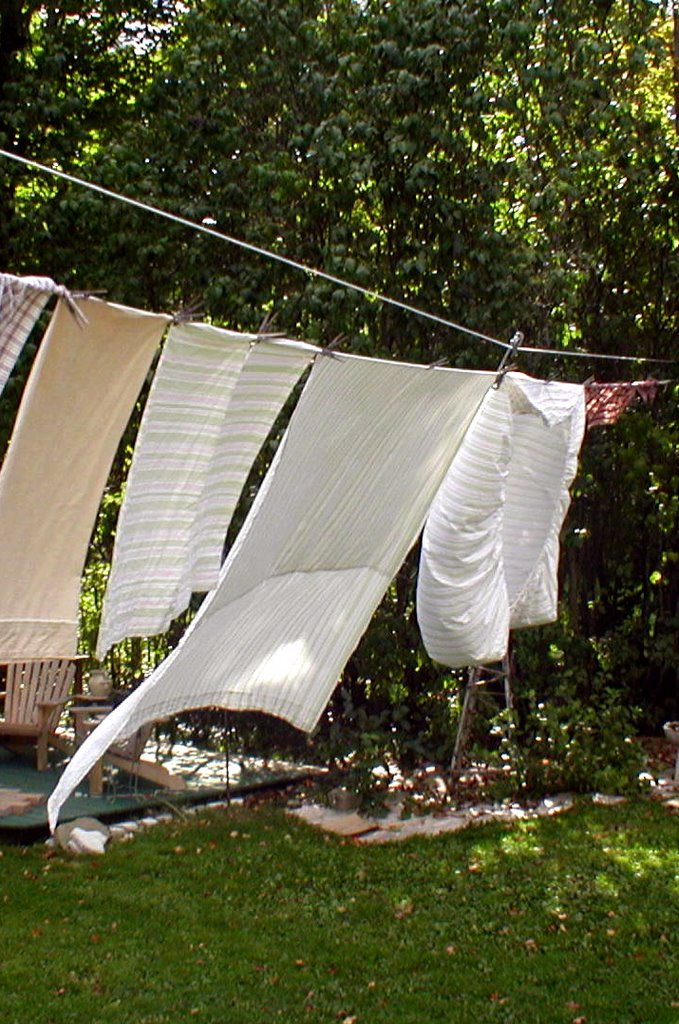
I did another load of wash, and hung it on the line in the sun as the quiche was cooking. (I love
 the scent and feel of cotton sheets dried on the line). While I was cooking and laundering, Dan painted the back wall of the barn. Just as I took the quiche from the oven, he came in and said, "It's a really nice day, maybe we should take the boats out."
Before he could change his mind, I was putting on my wet shoes and packing some lunch. More on our paddle down the Cathance River to Merrymeeting Bay next time --right now, time for this early riser to hit the hay, 5 a.m. comes so soon....
Subscribe to:
Posts (Atom)
